
The Mileage Deduction Most Self-Employed People Miss
The IRS standard mileage rate is 72.5 cents per mile for 2026. Here's what a contemporaneous log requires and why short trips are where deductions get lost


The IRS mileage deduction self-employed people use most is the standard mileage rate: 72.5 cents per mile in 2026, and close to that for several recent years. A 15,000-mile business year is a $10,875 deduction at that rate. Most people who drive for work know this exists. Fewer of them capture all of it.
The gap isn't knowledge. It's documentation.
What the IRS actually requires
The IRS requires a contemporaneous mileage log: date, destination, business purpose, and miles for each trip. "Contemporaneous" means recorded at or near the time of the trip, not reconstructed from memory or credit card statements months later.
The two most common methods for meeting this requirement:
Odometer-based logging. Record the odometer reading at the start and end of each trip. Miles driven equals end minus start. This is the method IRS auditors prefer because it creates a verifiable record tied to the vehicle, one that doesn't depend on GPS signal, app accuracy, or third-party data.
GPS auto-tracking. A phone app or in-car device tracks your route and records mileage automatically. Convenient, but the IRS treats auto-generated logs as reconstructed rather than contemporaneous. In an audit, a manually maintained odometer log generally survives scrutiny better than a GPS log from an app the IRS can't verify.
Short trips add up to real deductions
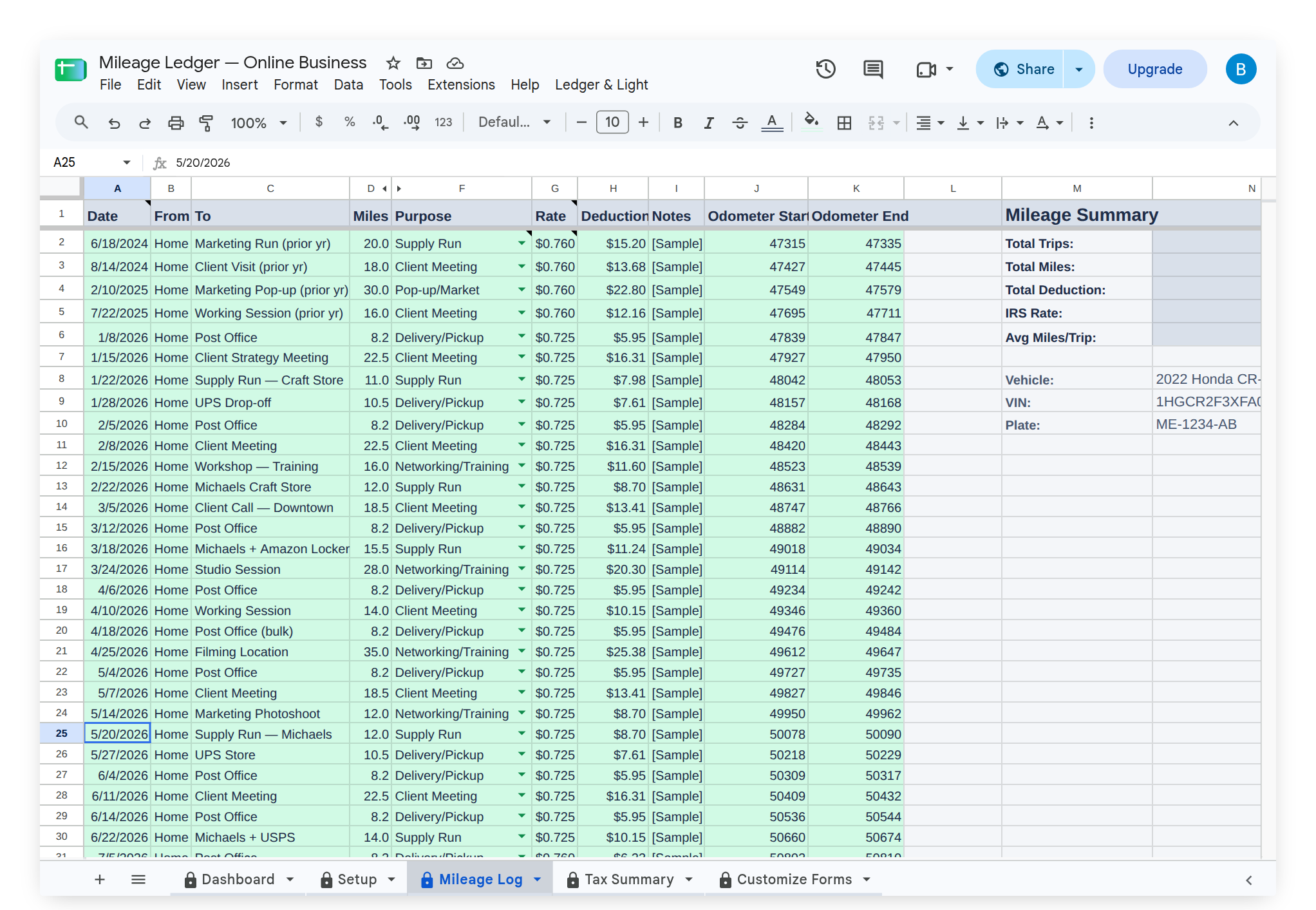
Short business trips don't feel worth logging. A 4-mile drive to the post office. A 6-mile round trip to a client. The mileage from the supply store run. Individually, these are small. In aggregate across a year, they add up to several hundred miles and several hundred dollars at any recent IRS rate.
The documentation barrier is the only thing standing between you and those deductions. A trip that adds up to a $5 deduction doesn't feel worth the trouble of logging. Which is exactly why most of them don't get logged.
The odometer trick
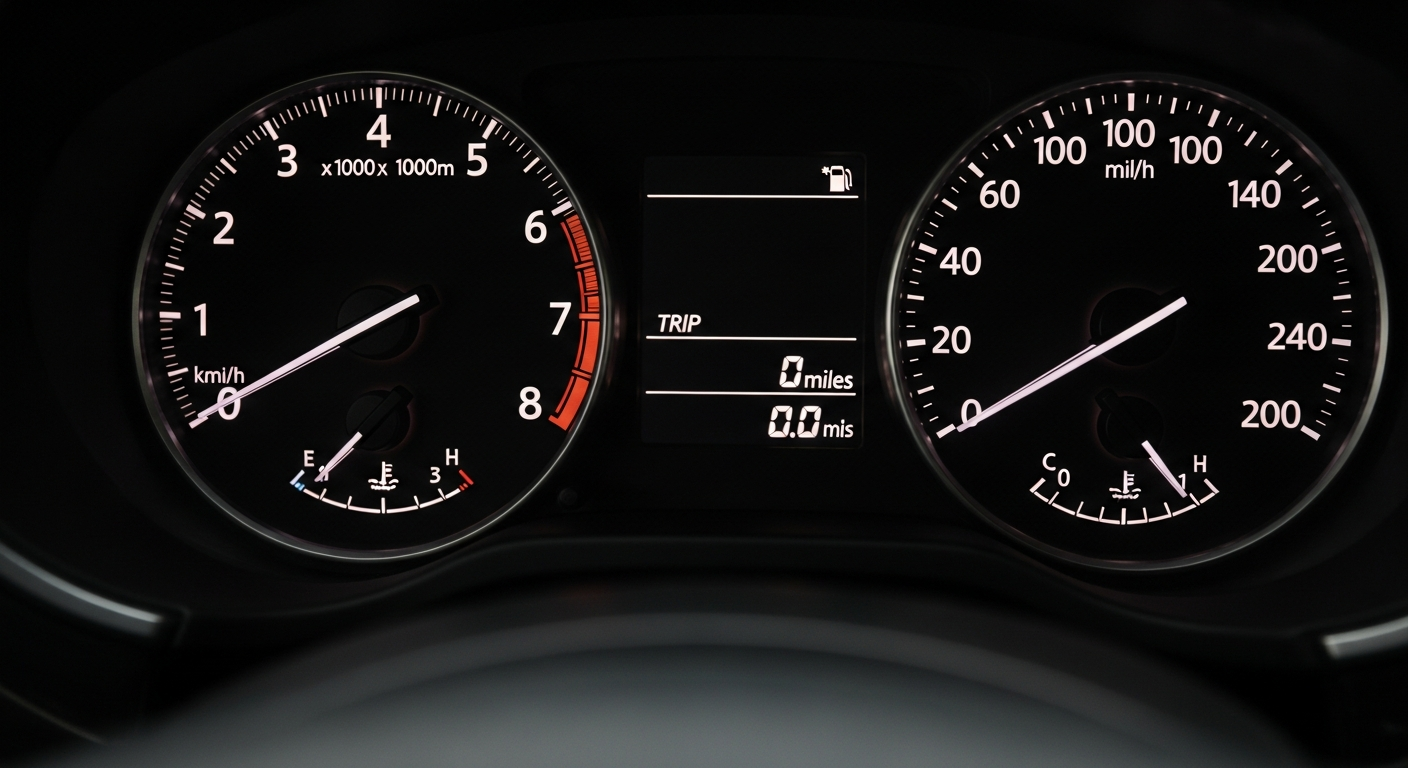
Modern vehicles display a trip odometer, a resettable counter you can set to zero at the start of a drive. Set it when you leave. Read it when you arrive. The miles are already calculated. No math required.
The Mileage Form is a linked Google Form you can open on your phone at the start or end of any business trip. (Mileage Log and Mileage Form are included in Mileage Ledger and Expense & Mileage Ledger.) Record odometer start, odometer end, destination, and business purpose. The Mileage Log calculates the deductible miles and applies the current IRS rate automatically. Your deduction total is current after every submission. No year-end calculation required.
The IRS rate: verify before filing
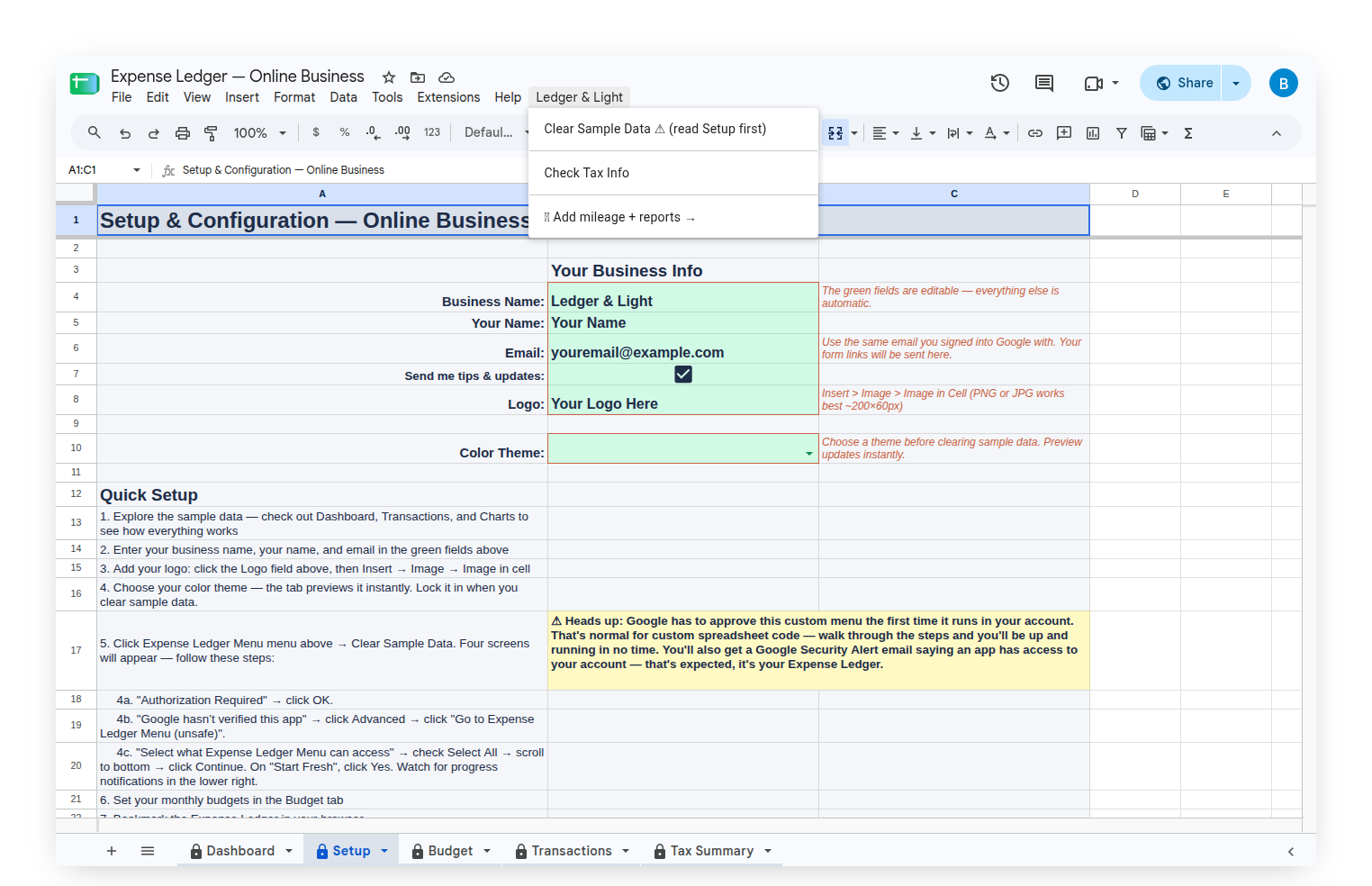
The IRS adjusts the standard mileage rate periodically. If the rate changed mid-year and your tracking tool applied it automatically in the background, you may not know what rate was applied to early-year trips. The Check Tax Info option in your custom Ledger & Light menu is a one-step confirmation that the IRS mileage rate in your sheet matches the current published rate before you file. You're not trusting a silent update; you're confirming the number.
What a year of consistent logging looks like
A business with 50 client trips per year, averaging 12 miles each, is 600 miles: $435 in deductions at 72.5 cents per mile. A side practice with 80 site visits averaging 20 miles each is 1,600 miles: $1,160. Neither number gets captured without a consistent logging habit.
The form on your phone turns the habit into an at-the-point-of-trip entry, not a reconstruction session at year-end. Open the form, enter the odometer readings and purpose, submit. Done before you've pulled out of the parking lot.