
The IRS Standard Mileage Rate, Explained
The IRS standard mileage rate explained: what it covers, what you can still deduct on top of it, and how it compares to the actual expense method


Here is the good news about the IRS standard mileage rate: it is the simple option, not the complicated one. One number, multiplied by business miles driven, and the deduction is done. The part that trips people up is not the math. It is not knowing what that one number already includes, which is exactly what turns a simple deduction into either a missed one or an accidentally doubled one.
What the standard mileage rate is
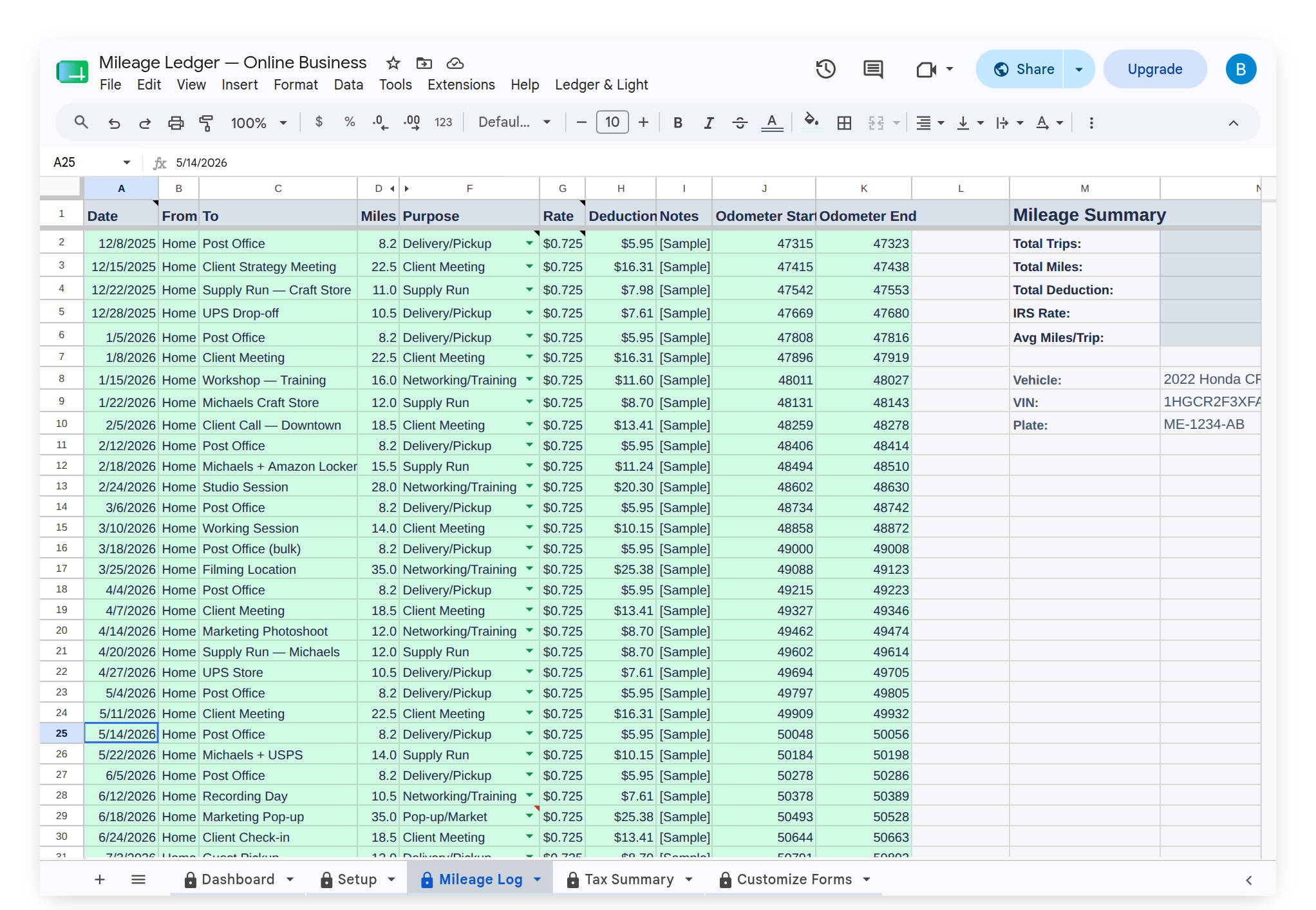
The IRS standard mileage rate is a per-mile figure the IRS sets each year for the deductible cost of operating a vehicle for business. Multiply the business miles driven by the current IRS standard mileage rate, and that product is the deduction. No receipts to sort by category, no separate tally of gas versus repairs versus insurance. Just the miles and the rate.
The rate itself changes, sometimes once a year and occasionally mid-year, which is exactly why it is worth looking up for the year in question rather than remembering a number from a past return. A rate quoted here would be stale within months. The current rate is what matters, and it is worth confirming for the specific tax year being filed.
What the rate already covers
This is the part that matters most, because it is where the double-dipping happens. The standard mileage rate is not just a gas allowance. It is built to cover the full cost of operating the vehicle for business, including:
- Gas
- Oil changes
- Maintenance and repairs
- Tires
- Insurance
- Registration
- Depreciation
All of it is baked into that one per-mile number. That means none of those costs get deducted again as separate expenses for the business use of that vehicle. Deducting mileage at the standard rate and then also deducting a car repair bill or an insurance premium double-counts a cost the rate was already built to cover.
What you can still deduct on top of the rate
The rate covers vehicle operating costs, not everything related to business driving. A few things sit outside it and are deductible in addition to the standard mileage amount:
- Parking and tolls paid for business trips (not parking or tolls tied to a personal commute)
- The business-use portion of car loan interest
- The business-use portion of personal property tax on the vehicle
These are kept separate because they are not costs of operating the vehicle mile by mile. They are additional, and they add to the deduction rather than getting absorbed into it.
Standard mileage vs. the actual expense method
The standard mileage rate is one of two ways to deduct vehicle costs. The other is the actual expense method, which totals the real cost of gas, insurance, repairs, depreciation, and the rest, then applies the business-use percentage to that total. A vehicle cannot use both methods for the same year, and there is a first-year consideration: choosing the standard mileage rate in the first year a vehicle is used for business generally keeps the actual expense method available in later years, while starting with actual expenses can limit the option to switch to standard mileage afterward. The details are worth confirming with an accountant before deciding. Standard Mileage Rate vs Actual Expense Method: Which Saves You More walks through how to weigh the two.
The record the rate still requires
None of this replaces the need for a mileage log. The standard mileage rate makes the math simple, but the business miles it gets multiplied by still have to be real, dated, and documented. A contemporaneous log, entries made at or near the time of each trip, is what substantiates the number the rate gets applied to. How to Log Business Mileage the IRS Will Accept covers what a compliant entry needs to include.
Where Mileage Ledger fits
Mileage Ledger applies the current IRS standard mileage rate automatically to every trip logged. Log a trip in the Mileage Form on a phone, in any mobile browser, with no app to download, and the deduction is calculated for that trip at the rate already in place. There is no need to look up the rate by hand or recompute anything at tax time.
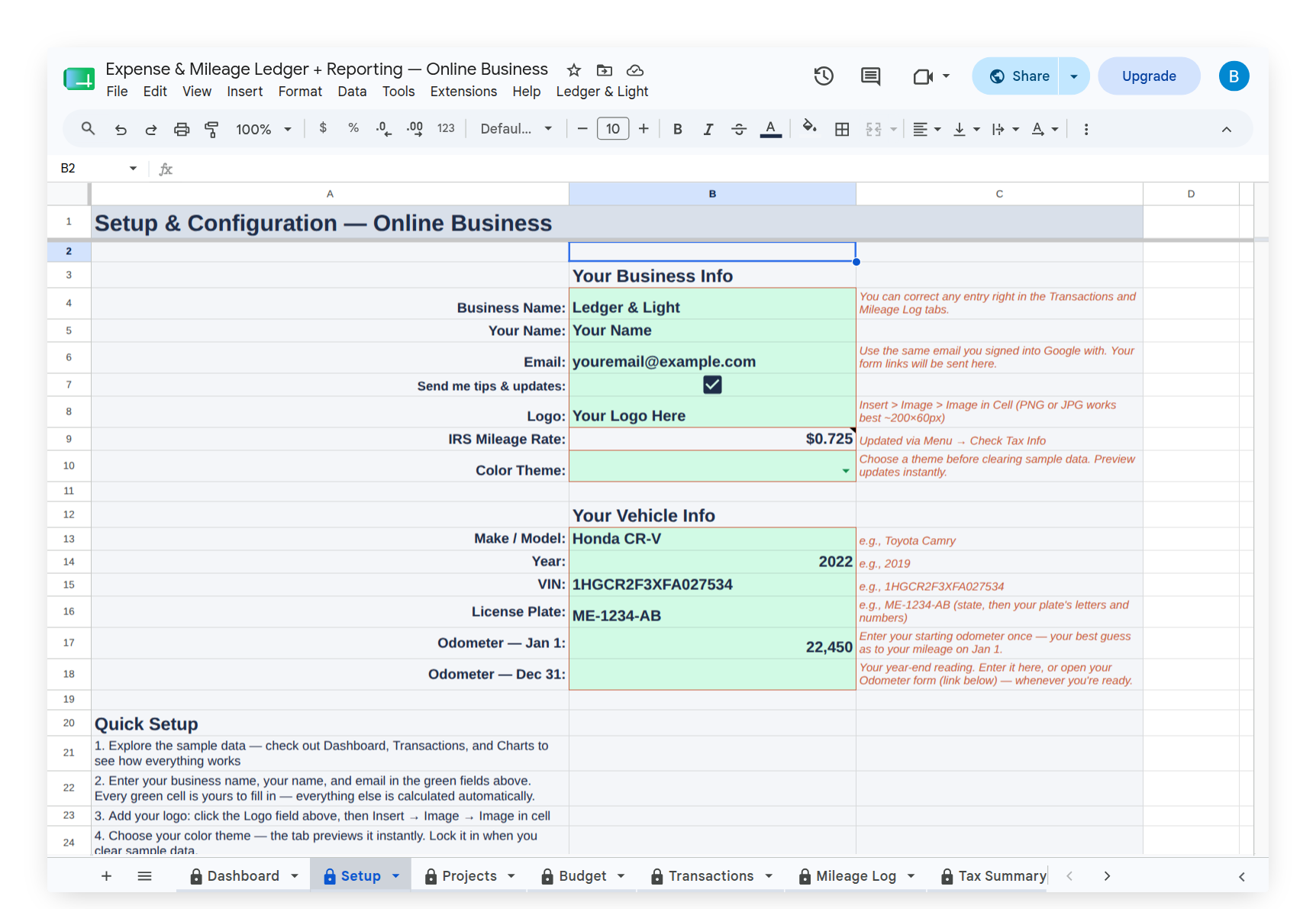
Because the rate changes from year to year, the Check Tax Info option in the custom Ledger & Light menu confirms the correct rate is applied for the tax year in question. One click, and the year's rate is verified rather than assumed.
Mileage Ledger holds many years of trips in a single file, so there is no need to start a new file at year-end or wait for January to begin logging. Every trip is entered with its own date, past dates included, and lands in the correct tax year automatically. For the year-end handoff, upgrading to Expense & Mileage Ledger + Reporting adds Email Mileage Log Report, which sends the full mileage log to an accountant as a formatted PDF, and Tab Export, which saves every tab to Drive. Mileage Ledger itself is a one-time purchase that lives in a personal Google Drive, not a subscription that has to keep being paid to keep the records readable.
This article is general information, not tax or legal advice. Confirm the current rate, the method choice, and how either applies to a specific vehicle and business with an accountant.